
What Makes Us Think, Feel and Behave the Way We Do? Psychology Students Explore Human Behaviour in London.
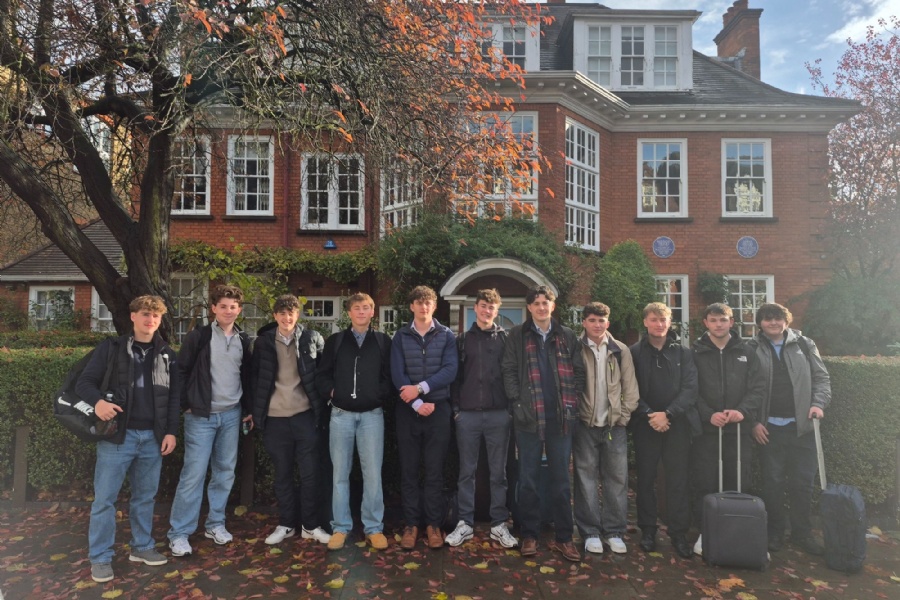
Students on this year's Psychology trip to London had the opportunity to hear from doctors, professors and researchers about some fascinating discoveries in psychology, while also exploring the history of the subject and seeing how psychological principles are applied within the justice system.
Psychology in Action Conference
The Nocebo Effect: When Expectations Affect Health
Students learned about the nocebo effect, where believing something may be harmful can produce genuine physical symptoms. Researchers discussed findings from Pfizer Covid vaccine trials, which showed very similar side effects between placebo and vaccine groups, with even more cases of upset stomach reported in the placebo group. Around 75% of all side effects were found to be attributable to the nocebo effect, highlighting how beliefs can trigger chemical responses in the brain that affect health.
Dark Empathy and Human Behaviour
Students explored the concept of "dark empathy" and examined how personality traits can influence the way people understand and relate to others. The session considered why some individuals are drawn to people who display antisocial or criminal behaviour and what this can tell us about human psychology.
The Impact of Covid-19 on the Brain
Students also learned about research into the neurological effects of Covid-19. Findings suggested that female brains experienced greater cortical thinning than male brains, meaning higher-order cognitive functions may have been more seriously affected. However, researchers found that children aged four to five were the most affected group overall, experiencing developmental losses in areas associated with self-regulation of thoughts and emotions.
Music, Mood and Mental Wellbeing
Another lecture explored the relationship between music and mood. Research suggests that listening to sad music when feeling depressed can actually improve wellbeing because it provides a sense of social support and empathy from the artist. Students learned that this effect can be strengthened by gradually moving towards more upbeat music, allowing the brain to mirror the changing emotional tone.
Why Moving Together Builds Trust
Students also heard about the impact of synchronised movement on social behaviour. Research has shown that moving in time with strangers helps people like and trust one another more, encourages feelings of shared values and goals, and increases prosocial behaviours such as helping others.
Dance, the Brain and Problem Solving
As part of the conference, students participated in structured dance activities led by Dr Dance, a researcher who studies the relationship between dance and the brain. Structured dance has been shown to improve the speed of convergent problem solving, which involves working through multiple steps or combining different ideas to reach a solution.
Exploring Freud's Legacy - The Freud Museum
Outside of the conference, students visited the Freud Museum, Freud's final home and clinic, where they explored some of the early foundations of psychological theory. They attended a seminar examining Freud's famous case study of Little Hans and learned more about Freud's background as a medical doctor and neurologist.
Students also examined some of Freud's most influential theories and discussed how his ideas sought to explain the development of fears, anxieties and human behaviour.
A highlight of the visit was the opportunity to see Freud's iconic therapy couch and pose for photographs on a replica. Students learned that Freud positioned patients in this way to avoid distracting them and to encourage them to focus on their inner psyche rather than on the therapist.
Psychology and the Law at the Old Bailey
Finally, students had the chance to experience making a case and persuading a jury at The Old Bailey, watching a cross-examination and seeing how barristers use evidence, questioning techniques and inconsistencies in testimony when presenting a case.
Bringing Psychology Beyond the Classroom
From cutting-edge psychological research and neuroscience to historical theories and the workings of the criminal justice system, the trip offered students an opportunity to see psychology far beyond the classroom. Through expert talks, interactive activities and real-world experiences, students gained valuable insights into human behaviour and the many ways psychology continues to shape our understanding of ourselves and others.